Why the Context of Advent Matters
Curiosity Protects Meaning
Context gives meaning to events.
Don’t you ever tire of the way our culture blindly accepts statements given on any topic without any source to help shape the context of what’s being asserted?
Do you ever wonder why Advent, say, 30 years ago wasn’t nearly the event it is today? And I mean that commercially, not theologically?
When people refer to the Enlightenment, does curiosity ever bubble up in your mind?
“What actually was the Enlightenment,” you might think to yourself. “And how did it begin? And who was involved?
Events, be they historical or intellectual or even literary, rely on context for meaning.
In a story, for example, if you don’t know the context in which the characters exist, there is no story. What is the context of The Lion, the Witch, and The Wardrobe?
Narnia is frozen and under the evil oppressive reign of the White Witch. That’s what Lucy stumbles into when she stumbles through the wardrobe.
Once you discover what’s going on in this beautiful wintry place, you don’t see the snow as pretty as you might have otherwise. You long for something or someone to break the spell, so spring can come.
I love discovering the context of historical events or thought movements, like British Romanticism or the French Revolution.
Throughout my life I’ve heard people talk about the importance of the French Revolution, but seldom did they paint a historical context for what was happening throughout the world at that time.
Why did the overthrow of the aristocracy matter in France? Why would such an overthrow matter to the rest of Europe? What was England up to during this time?
The poets of the day actually provide a wonderful portal into the context of the French Revolution. That’s a bit foreign to us because our culture does not value poets like the European cultures of the eighteenth century.
Poets in England, for example, were revered and many were bright public intellectuals, some were theologians as well, like Samuel Taylor Coleridge. Two of the greatest living poets during this time period were William Wordsworth—my all-time favourite poet—and William Blake.
For these two luminaries, the French Revolution signalled the advent of new world order. They literally saw the world transitioning from the old feudal way of governing and living, to one of freedom.
Capitalism was already on the rise in Italy. And the hope of a new day, an era marked by a total transformation of ideals, infused Wordsworth and Blake with a light that seared through the darkness of despair that fell upon the landscape of age.
I could go on and paint an even more detailed portrait of the day and age, but I’m trying to keep these newsletters manageable. [Smirk]
And yet, I find many in the world of writing, for example, who do not like the nuance of context and recommend writers not spend much time at all outlining problems in books or articles because the reader just wants to get to the part where you can help them or give them something of value.
That’s our culture for you. Give me what I want, what I need, so I can move on and consume something else. Giving context, well, it just takes too long.
But by taking the time to sketch a portrait of something as complex and nuanced as the French Revolution—providing a reader with context—it creates a wonderful relationship between writer and reader where deep understanding gives birth to the desire for some kind of action, be that activism, contemplation, or inspiring a deeper love for one’s freedom.
Our culture says: state the problem, then spend the rest of the time telling me what I should do. That’s a utilitarian mindset.
But wisdom and understanding, as intimated by the writer of Proverbs, are gained not through bumper sticker statements of theology or politics or philosophy, but through the relentless pursuit of the subject. It takes time.
I am not big on seasonal observances created by us humans, like Lent and Advent. Perhaps that’s just part of my anabaptist upbringing. But if asked, I tell people that my disdain comes from observing what they’ve become in the culture, over-commercialized and watered down, not from what they stand for.
Like Lent, Advent’s origin is vague. It probably started at the end of the fourth century, around 380 A.D. And what so often bothers me is the Christian community’s embrace of these observances without delving into the historical context.
And yes, I’m aware that’s a broad statement, and this newsletter isn’t intended to be a rant against Advent. I’m trying to build up to the part where I tell you how context has given this season of Advent deeper meaning for me in recent years.
When I ask my daughters what they know about Christmas, they tell me about the birth of Jesus of Nazareth.
Then, I ask them why is that important?
This question begins a long discussion into context. We rewind the tape, as it were, to Eden and the scene of betrayal by Adam and Eve and the scene of expulsion from the garden.
Then the discussion rabbit-trails into various stories from the Old Testament, some of which my daughters have heard told at church but out of context. They remember who Joseph is and what he did, but they don’t know why his story matters.
Last year we talked at length about the importance of Joseph’s story and why it matters to the season of Advent. But don’t worry, I’m not getting into Joseph now, because I’m trying to keep this really short. [Smirk II]
This year, I’ve decided to hover within the book of Isaiah. Talk about context.
I love Isaiah and the prophets because they just give it to the pig-headed Israelites. All the way back to Moses, God told them, “Look, I’ll give you this incredible land. Just don’t worship the pagan deities. And while you're at it, when you get into the land, destroy the pagan worship places.”
They, of course, do not listen to YHWH. And that’s where Isaiah picks up.
Right after he’s commissioned as a prophet in chapter six, he tells of awful things in store for Israel. YHWH says to Isaiah, “My care for the people of Judah is like the gently flowing waters of Shiloah, but they have rejected it.”
YHWH reminds the people, through Isaiah, to trust in him and not in the political landscape of the times. They are to delight in God, not be distracted by the power struggle of kings.
And then Isaiah brings the light of hope into the picture in the famous chapter nine. We love verses six and seven, but let’s hover here for a moment, a few verses earlier.
Nevertheless, that time of darkness and despair will not go on forever. The land of Zebulun and Naphtali will be humbled, but there will be a time in the future when Galilee of the Gentiles, which lies along the road that runs between the Jordan and the sea, will be filled with glory.
The people who walk in darkness
will see a great light.
For those who live in a land of deep darkness,
a light will shine.
You will enlarge the nation of Israel,
and its people will rejoice.
They will rejoice before you
as people rejoice at the harvest
and like warriors dividing the plunder.
For you will break the yoke of their slavery
and lift the heavy burden from their shoulders.
You will break the oppressor’s rod,
just as you did when you destroyed the army of Midian.
The boots of the warrior
and the uniforms bloodstained by war
will all be burned.
They will be fuel for the fire.
Keep in mind, Isaiah is probably writing this in the early eighth century BC, some 700 years before the glory of Rome and the ministry of the vagabond carpenter with his fisherman brethren.
It’s easy to brush right past this. To not read the history of Israel’s toil with Assyria.
“Just skip to the good part!” we say. “Give me Christmas, you know, Bethlehem and the story (which by the way I wrote a story about)! Let’s light candles and sing!”
But let the words of God through Isaiah wash over you. There’s a deep darkness over Israel but God does not wish it on them. They keep rejecting him or get distracted by politics (sound familiar?).
“A light is coming,” says Isaiah. “Stay the course.”
But it doesn’t happen for another 700 years. This alone should give us hope and strengthen or spiritual grit. Are we not in a time of darkness: pandemic, political unrest, social chaos? We want it to end now. But what if it doesn’t end by the spring or even next Christmas.
How do we persevere?
Through context:
Knowing of dark times in history when God perhaps felt far away but wasn’t.
Knowing of a great light that is returning.
Knowing of a coming kingdom that will make this mess we’re in obsolete.
That’s context, right from Isaiah.
The context of the French Revolution can be easily summed up, as most people like to do. But through the nuance and beauty found in the details of the world’s stage at this point in history, greater knowledge and appreciation is gained.
The season of Advent, Christmas, can easily fall into ritual and commercialization. Don’t let it!
Rewind the events of world history. Spend time rereading the inciting incident of all human history—the fall in the Garden. Perhaps supplement it with some Milton and Paradise Lost.
Study what a theophany is and how God covered himself in glory every time after he appears after the garden incident. Why did he do that? Why did he hide Moses in the rock, but proclaimed who he was before he did so?
Why does the writer John refer to the logos for the first few verses in the John, and then stops using that name, and uses Jesus, Immanuel, God with us? How is John’s prologue similar to how God described himself to Moses on Sinai?
Why is Isaiah’s poetic words about this light in the darkness so significant? What kind of radical change is he insinuating when he talks about the Gentiles coming into the picture with YHWH?
Let’s not lose the wonder of curious hearts. Let’s dig deep into the beauty of context. Why? So we can articulate to the world a love story beyond comprehension.
Next time, we’ll get to verses six and seven and the “Wonderful Counsellor.” But for now, let’s marinate on the coming of a great light.
I told you this would be a short one.
Until next time.
Cheers,
Tim
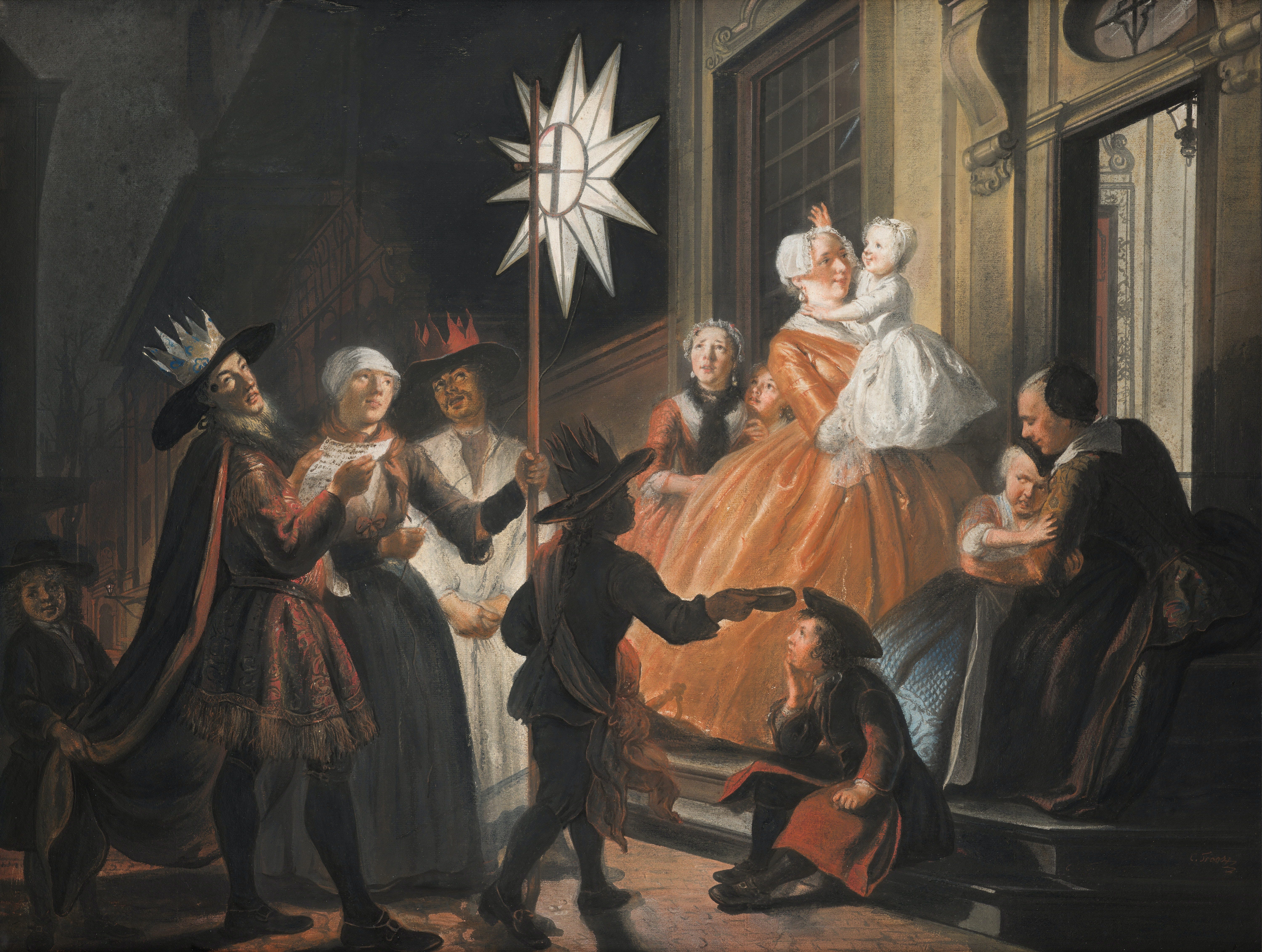
Photo by British Library on Unsplash


I'd love to hear how you celebrate the season of Advent. This year our family is doing a daily reading of a story, the title of which escapes me at the moment. We have one candle--a tea light set into the top of a candle holder made to look like a small birch log. :) What can I say, I like my candles to feel like they came from the forest.