
Why & How I Read
My Not-So-Secret Secrets for Deep Reading

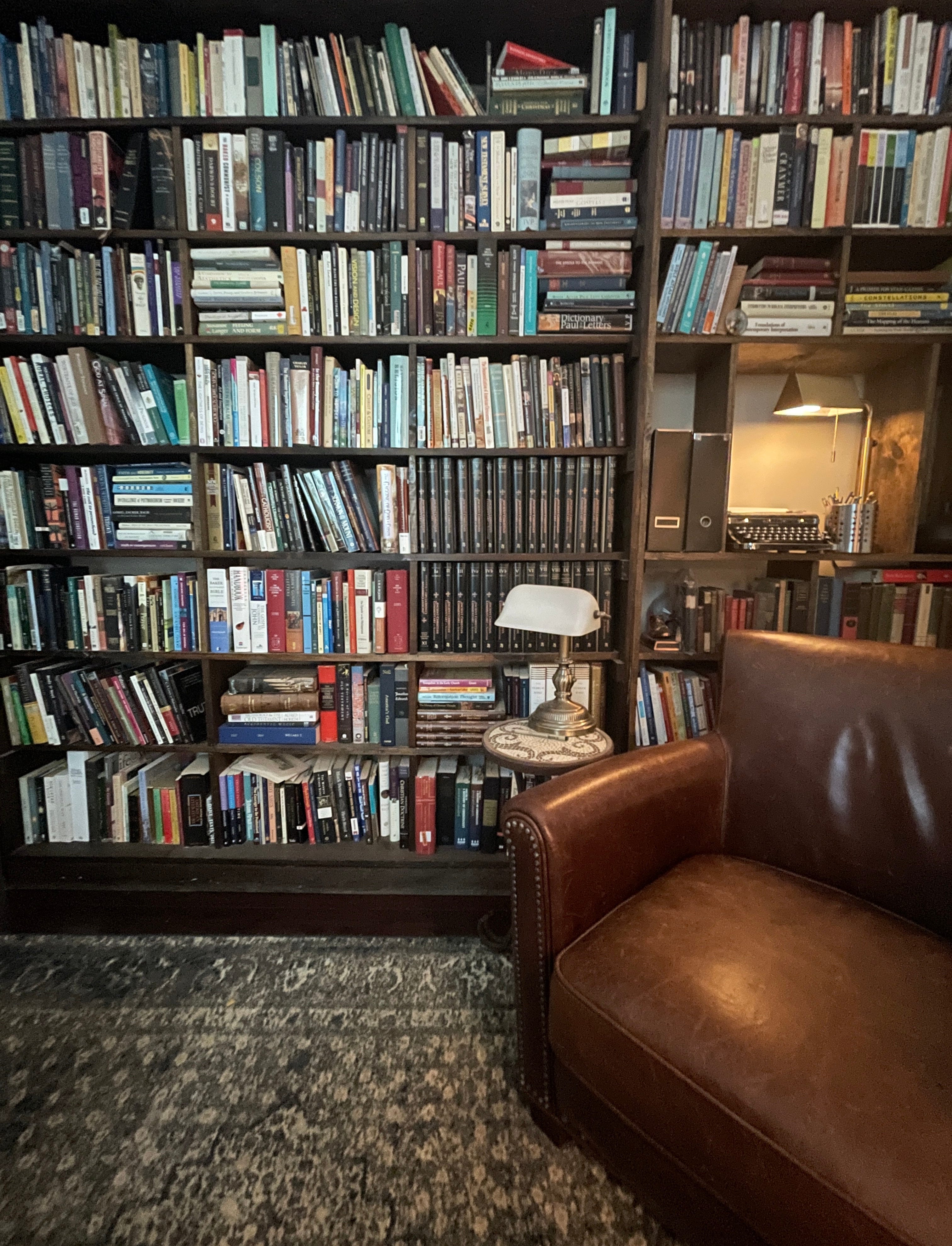
I sat with my friends MyQuillyn and Chad at a coffee shop in downtown Morganton, North Carolina. As we sipped our beverages, I began ranting about reading, research, and my approach to learning.
“Please write about that on your Substack,” said MyQuillyn.
“Do you think people want to hear about that?” I replied.
“Of course we do!”
As I reflected on her challenge, I thought about other friends and readers who’ve asked me about reading, book recommendations, or how to research a topic. I’ve also been asked how I retain what I read—as if I have some Marvel-comic-related superpower. I don’t, by the way.
(Or, maybe I do. Stay tuned. Readers, assemble.)
“Ok, I guess there is something to this,” I thought. “After all, when I began graduate school, I was always trying to learn new methods for research and reading.”
So, here we go.
My Reading Speed
I am a slow reader—most of the time. I am not a speed reader, though I spent some time practicing speed reading techniques years ago. I once read an entire book on theology and postmodernism in one night during seminary and retained much of it.
This is probably because I was actively highlighting and jotting notes the entire time. It took me several hours of intense focus and zero distractions, but that’s not the norm.
Typically, I read at an average pace. I don’t read for volume. I read for understanding and retention. More important than speed is frequency and discipline. Like any muscle, the more you read, the better you get at it—the bigger your reading muscle grows.
My Notetaking Model
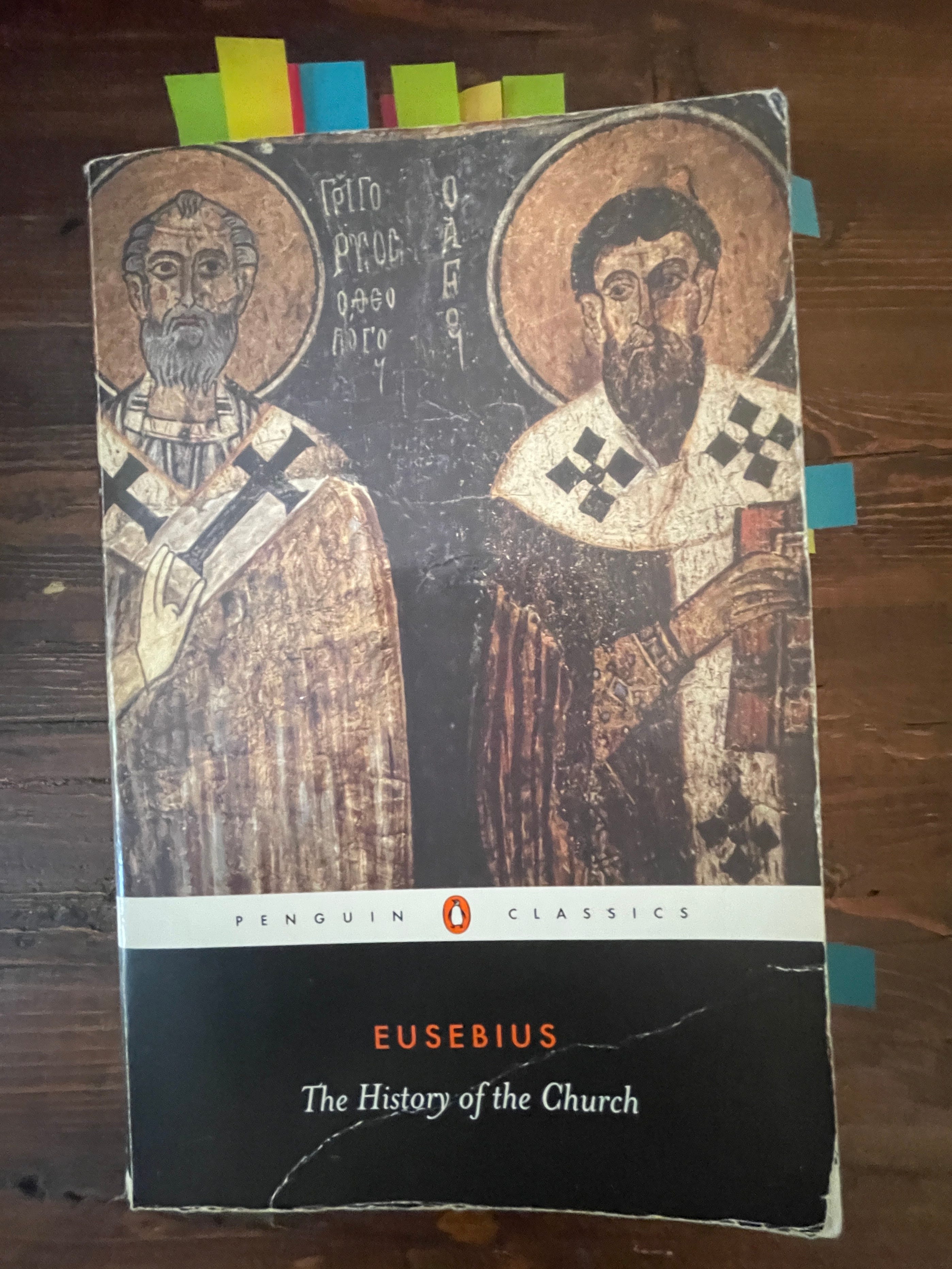
I highlight with a red (watercolor) pencil. I use page flags to mark pages I want to revisit later. A vertical flag means the page is essential.
A page containing a vertical and a horizontal flag means I quoted from it and should revisit it often. The colors of my flags don’t matter. I’m not that sophisticated with my flags, but I do love them.
I take notes by writing about what I read almost immediately. I do this either in my physical journal, which is always near me, or on my computer. I use the native Notes app on my MacBook Pro, though I used to use Evernote until they made it weird by forcing me to pay for it.
I used Evernote exclusively for my doctoral research—nothing beats it. They just beat themselves by making it paid, sad. The Notes app is refined and simple to use. The phone app allows for dictation, which I utilize often.
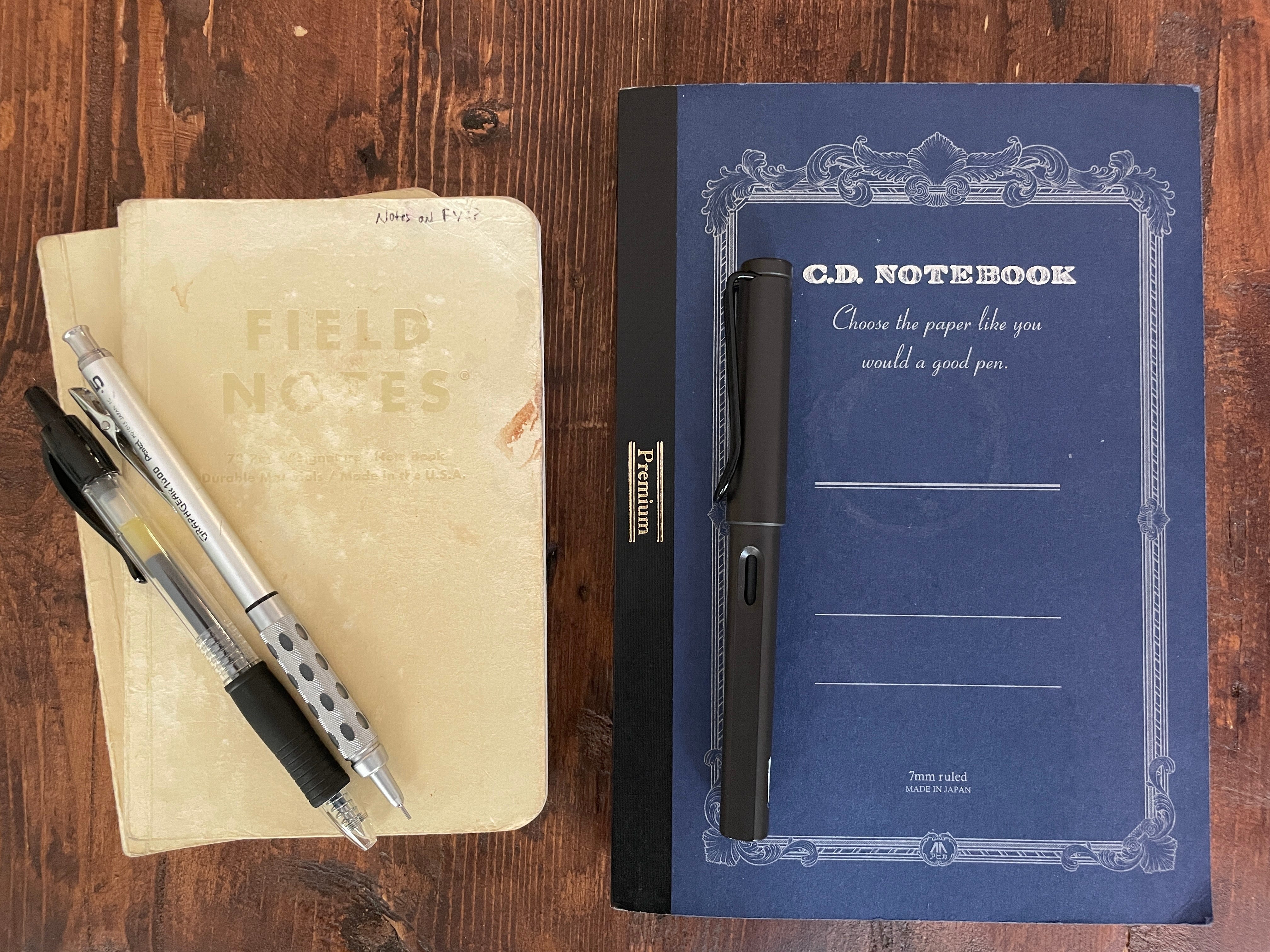
I keep multiple journals going at once. One is for spiritual reflection, another for poems, another for book ideas, another for the idea I’m currently working through, and the list goes on.
My journal of choice—at the moment—is the C.D. Notebook. It’s made with exquisite Japanese paper, which is incredible, and easily holds the ink of my Lamy fountain pen.
I also love the perfect-bound booklet Field Notes. The size is unique and perfect for use as a small journal that I can actually tuck in the books I’m reading. Field Notes is an excellent brand, but they don’t often make the size I like.
My Book Stacks
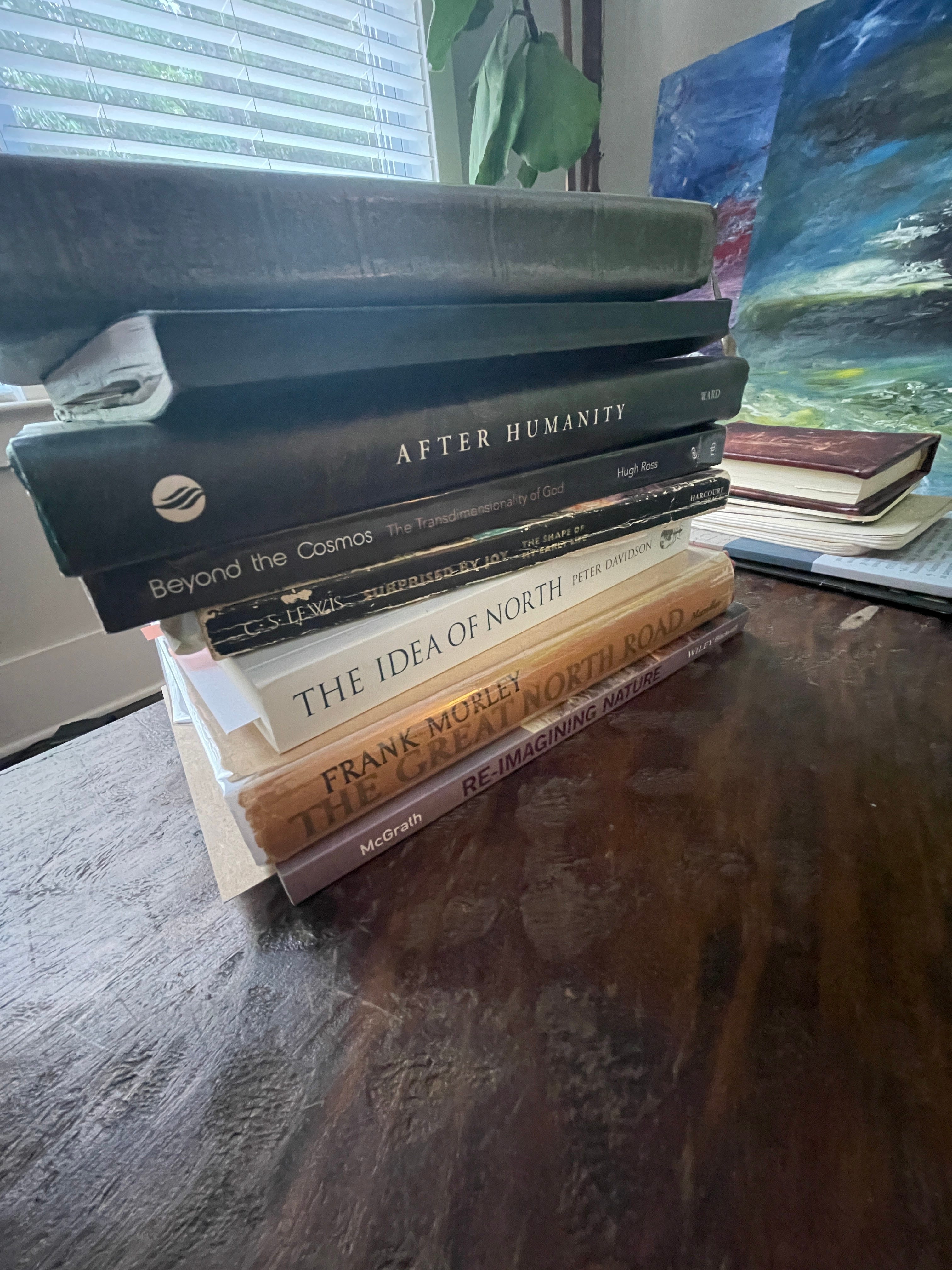
I read multiple books at once.
I keep stacks of books all around the house. Why? Because my book stacks represent thought lines. In front of me, on the coffee table, is a rather large stack of books dealing with aesthetics, beauty, and ancient archaeology.
Why? Because I was studying the aesthetics of architecture for a podcast episode.

To my left, I have a book stack containing eight books on cultural anthropology, philosophy, and C.S. Lewis because I’m editing an academic book proposal.
Tim’s advice: Don’t listen to people who tell you that you must read every book from cover to cover. That’s silly.
I stopped doing that decades ago. When I read How to Read a Book by Mortimer Adler, I realized that books serve various purposes and represent conversations you’re having with the author.
Some books I skim, some I read deeply. Some I never finish—I use them for a particular passage or to familiarize myself with the thought of a specific topic.
Some books I buy the printed version, the Kindle version, and the audiobook version.
Why would I do this?
How I Use Audio Books
I use Kindle’s ability to search for keywords. I use audiobooks to reinforce what I’m reading. Contrary to what some say about audiobooks, I believe it’s entirely appropriate to use audiobooks with intentionality.
Listening to books provides unique benefits. I use audiobooks primarily for fiction. However, while doing my doctoral research, I used audiobooks to reinforce my deep reading of C.S. Lewis. I’ve listened to The Abolition of Man at least ten times.
I sometimes pause to reflect on a section when I listen to nonfiction audiobooks. I’ll also rewind and listen to a chapter again.
I use audiobooks when I hike the five-mile trail behind our house. Most of the year, except for the scorching summer months, I hike/walk the trail several times a week. In one-hour chunks, you can finish a book like The Screwtape Letters in about four walks.
An example of using audiobooks to reinforce deep reading would be my reading of Charles Taylor’s massive tome, A Secular Age, and Augustine’s The City of God while simultaneously listening to them on audiobooks.
But to read hefty nonfiction such as these works, you must read the physical book. Listening solely to the audiobook of Taylor’s philosophical masterpiece will not help your comprehension of his material. More on this below.
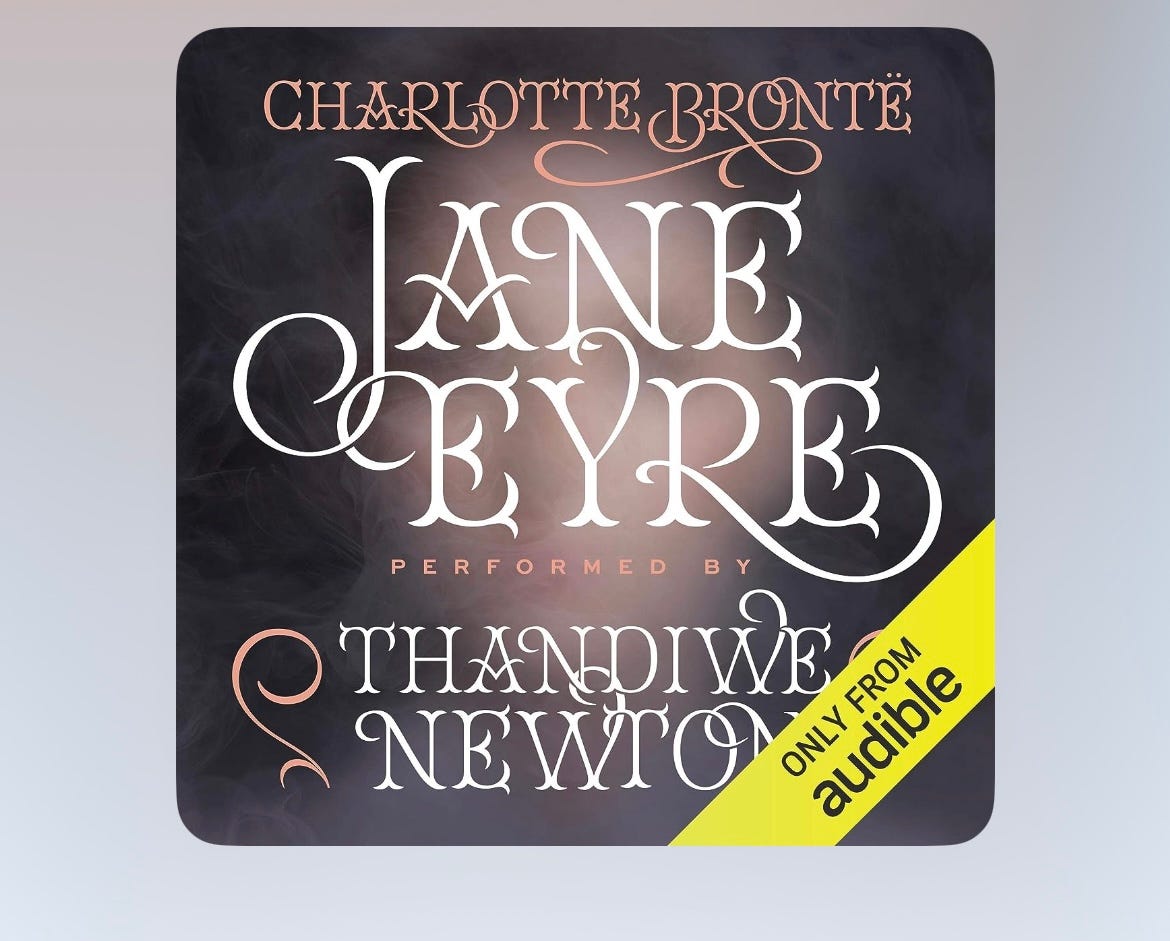
My favorite audiobook is Jane Eyre, narrated by the brilliant Thandie Newton. I’m currently half way through the complete works of Sir Arthur Conan Doyle. It’s superb.
But though I endorse intentional audiobook use, I must tell you that audiobooks do not come close to giving you the same depth of understanding that reading a physical book will. I do not recommend using audiobooks as your primary source of learning.
People often make the mistake of thinking they can consume more books via audiobooks. And that’s probably true because you can adjust the narrator's speed. But remember, the quality of reading is more important than the quantity of reading.
This principle holds for podcasts. Though podcasts offer us a great way to engage with current thought, cultural conversations, and entertainment, you will learn more about a topic from reading a physical book than from listening to a podcast on your way to work.
You can search for this topic and find differing views and opinions. However, experts say nothing matches reading a physical book for deep learning and reading comprehension. In one article that summarizes a few studies on the topic, an expert says:1
If you’re reading, it’s pretty easy to go back and find the point at which you zoned out. It’s not so easy if you’re listening to a recording, Daniel says. Especially if you’re grappling with a complicated text, the ability to quickly backtrack and re-examine the material may aid learning, and this is likely easier to do while reading than while listening. “Turning the page of a book also gives you a slight break,” he says. This brief pause may create space for your brain to store or savor the information you’re absorbing.
Daniel coauthored a 2010 study that found students who listened to a podcast lesson performed worse on a comprehension quiz than students who read the same lesson on paper. “And the podcast group did a lot worse, not a little worse,” he says. Compared to the readers, the listeners scored an average of 28% lower on the quiz—about the difference between an A or a D grade, he says.
Interestingly, at the start of the experiment, almost all the students wanted to be in the podcast group. “But then right before I gave them the quiz, I asked them again which group they would want to be in, and most of them had changed their minds—they wanted to be in the reading group,” Daniel says. “They knew they hadn’t learned as much.”
Mortimer Adler cautions us to remain disciplined in our reading. More than ever, reading is attacked by the noise of entertainment and mindless amusement (amusement means “no mind”). We must employ safeguards to keep our minds free of noise and focus on maintaining a rhythm of deep reading. Adler says:2
“Television, radio, and all the sources of amusement and information that surround us in our daily lives are also artificial props. They can give us the impression that our minds are active, because we are required to react to stimuli from the outside. But the power of those external stimuli to keep us going is limited. They are like drugs. We grow used to them, and we continuously need more and more of them. Eventually, they have little or no effect. Then, if we lack resources within ourselves, we cease to grow intellectually, morally, and spiritually. And we we cease to grow, we begin to die.”
If this quote were updated to our current cultural context, podcasts, social media, and gaming would be added to his list of amusements.
The Habit of Reading
As a writer, deep reading is a requirement. A writer is a reader. This is a non-negotiable. I don’t have a specific number of pages I aim to read daily. If I were to guess, it would be at least 45 pages a day, at minimum.
I read every day. I begin my day by reading, trying to avoid using my phone for as long as possible. I read while enjoying my first cup of tea in the morning. My reading begins with the Bible and a commentary, and it continues throughout the day as I dive into my current book stack or research a topic I’m going to speak or write on.
I generally end my day by reading when possible. I try to read at least one timeless classic work or a foundational book in my academic discipline on an ongoing basis. Currently, I’m rereading Dominion by Tom Holland.
Habits can be difficult to create and even more challenging to keep. In books like Atomic Habits, Essentialism, or Peak, we’ve learned that the discipline of purposeful practice is essential for growing and pushing our minds out of the equilibrium of the status quo and into the space where big change occurs.
“Routine is one of the most powerful tools for removing obstacles.”3
Why I Read
I read because words contain a unique power.
I relate reading to the spiritual realm. The Greeks believed in the divine logos—a divine and rational intelligence.
The Teacher in Proverbs describes Wisdom as a person or being who was with God at creation, delighting in humanity's creation. Wisdom is a craftsman, an architect, and an agent of divine creation. This beautiful creative agent reveled in the creation of the icons of God, us—rational beings beloved of God.
The Apostle John riffed on this Greek logos idea but took it further by naming it—Jesus.
The Logos became flesh and dwelt among us. He spoke to us with fire and conviction. The disciples' words continue the work of the Flesh-Word.
So, I equate this spiritual origin for rational thought and words to the words found in books and see that they contain a unique power: to persuade, convict, inspire, challenge, teach, and entertain, and I’m sure you could add to my list.
When I read, I think about the rational being whose words I am reading. I learn, but I am also expanded on the inside. My rational and imaginative horizons grow.
Yale professor Paul Holmer said this about C.S. Lewis’s ability to communicate on such a deep level with his writing. He said: “Lewis’s literature communicates in such a way that, when successful, it creates new capabilities and capacities, powers and a kind of roominess in the human personality.”4
G. Gabrielle Starr says that beauty does the same to our minds—working on us and expanding who we are as human beings. I see words, books, and literature as this beautiful medium through which we experience divine beauty that simultaneously speaks to our left brain—data and information—while injecting our right brain—sense-making ability—with imaginative magic.
Not pagan magic, mind you, but the kind Aslan speaks about to the Pevensie children—a deep magic, a divine substance that holds the world together—the Logos, who is the Christ.
When I read, I grow. My soul expands. And I further understand God, his creation, and the beautiful human beings around me.
Reading gives life.
Reading gives joy.
Reading expands my soul.
Reading informs my intellect.
Reading fires my imagination.
Reading is an act of worship.
The Big Forever Sale is still on, but only for another week. Get 30% off your subscription f o r e v e r. When you become a paid subscriber, you make my writing on this platform possible. Your contribution gives me the time and resources to provide you and others with quality writing and resources like the new podcast and my upcoming course, Marveling. For the price of one venti soy latte a month, you help bring my writing into the world. And for this, I am humbled and deeply appreciative.
Notes for the really interested.
Markham Heid, “Are Audiobooks As Good For You As Reading? Here’s What Experts Say,” TIME, September 6, 2018, https://time.com/5388681/audiobooks-reading-books/.
Mortimer J. Adler and Charles Van Doren, How to Read a Book: The Classic Guide to Intelligent Reading, Revised edition (New York: Touchstone, 1972).
Greg McKeown, Essentialism: The Disciplined Pursuit of Less, 1st edition (New York: Crown Currency, 2014).
Paul L Holmer, C.S. Lewis: The Shape of His Faith and Thought (London: Sheldon, 1977), 20-21.
Thanks for the inspiration. Substack is great, but I am now putting the phone down in favor of a good old paper book and cup of tea!
I very much enjoyed the peak into your process. Thank you for sharing it in such detail. Deep reading has become a spiritual practice for me, a practice I adopted after a conversation with my friend Emily, Myquillyn's sister.
Last month, Pope Francis wrote about the importance of reading literature for spiritual formation. While the letter is addressed to priests, he shared many ideas that are beneficial for anyone who reads.
I found this section intriguing: "This is a definition of literature that I like very much: listening to another person’s voice. We must never forget how dangerous it is to stop listening to the voice of other people when they challenge us! We immediately fall into self-isolation; we enter into a kind of “spiritual deafness”, which has a negative effect on our relationship with ourselves and our relationship with God, no matter how much theology or psychology we may have studied."
Again, thank you for taking the time to share your process.